Classic Cocktails You Should Try at a Gin Bar
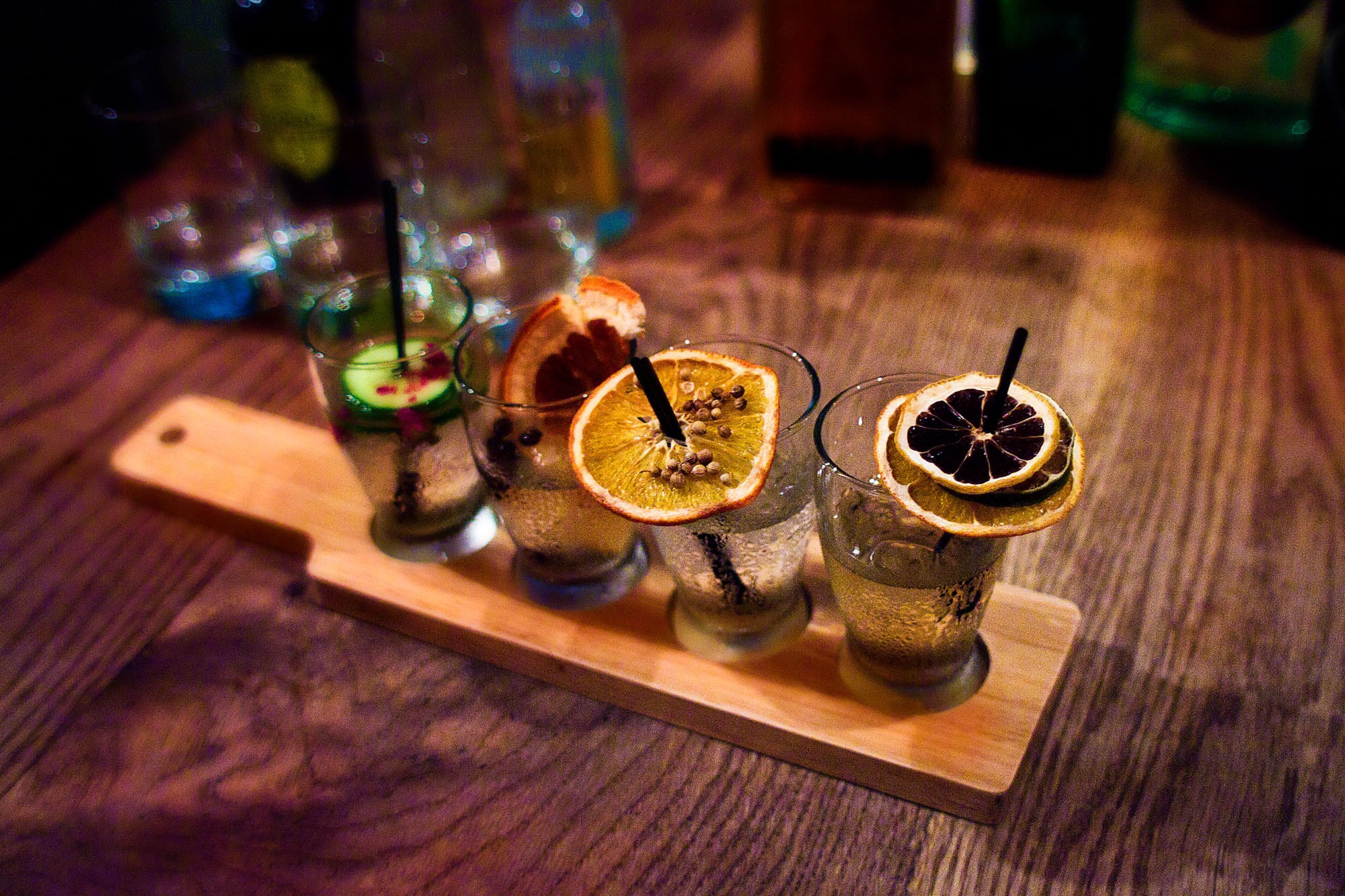
A good Gin Bar does more than pour a familiar spirit into a chilled glass. It reveals how broad gin can be, how a change in vermouth, citrus, dilution, or garnish can shift a drink from sharp and brisk to plush and aromatic. People often think of gin as a single-note category built on juniper alone, but spend one evening in a serious bar and that idea falls apart quickly. London dry, contemporary citrus-forward styles, floral bottlings, old tom, navy strength, barrel-rested gin, each one behaves differently once it meets ice and modifiers.
That is why classic cocktails matter so much in a gin setting. They are not museum pieces. They are working templates that show what gin can do under pressure. A Martini tells you about texture, temperature, and restraint. A Negroni tells you how bitterness and sweetness can frame botanical intensity. A Gimlet shows whether a bar knows how to balance acid against spirit without flattening either side. Order a few of the right classics, and you learn a lot about both the gin and the people behind the stick.
The best part is that these drinks are not reserved for experts. You do not need to recite obscure history or know the exact origin story of every recipe. You simply need a little guidance on which classics deserve your attention and what to expect when they arrive.
Why gin classics are worth exploring in a dedicated bar
A specialized Gin Bar usually keeps a wider back bar than a general cocktail lounge. That means more than quantity. It means better options for matching a specific gin to a specific structure. In an average bar, a Martini may be made with whichever dry gin is open and whichever vermouth is not too old. In a stronger gin program, the bartender may have three or four dry vermouths at proper temperature, multiple orange bitters, and enough confidence to ask whether you prefer it lean, savory, floral, or very cold and brisk.
Classic cocktails reward that level of care. They are transparent drinks. There is nowhere to hide a poor vermouth, a tired citrus wedge, warm glassware, or heavy-handed dilution. At the same time, they offer huge returns when the details are right. A well-built gin classic often tastes more vivid than a far more complicated modern recipe with six ingredients and a cloud of garnish.
There is also a practical reason to start with classics. They create a shared language between guest and bartender. If you order a Martini, a Collins, or a Last Word, an experienced bartender can adjust the style to fit your palate without starting from zero. Say you like more citrus, less sugar, or a firmer bitter edge, and the whole exchange becomes easier.
The Martini, still the ultimate measure
If I want to know whether a Gin Bar takes itself seriously, I watch how it handles the Martini. This is not snobbery. It is simple logic. Few drinks expose technique so completely. Temperature, dilution, vermouth freshness, garnish choice, and glassware all matter. The difference between a forgettable Martini and an exceptional one can come down to twenty seconds of stirring or a quarter ounce of vermouth.
A classic gin Martini, properly cold and balanced, is vivid rather than punishing. Juniper leads, but it should not bludgeon the palate. Good vermouth softens the edges and contributes herbs, flowers, spice, and a faint saline quality. Lemon peel brightens the nose in one direction, an olive pulls it into savory territory in another. Both are valid, though they make the drink feel like two close relatives rather than one fixed recipe.
At a Gin Bar, this is the drink that often opens the best conversation. A thoughtful bartender may ask whether you want it wetter or drier, whether you prefer citrus or olive, or whether you are open to trying an old tom variation if you like a slightly rounder finish. That interaction matters because the Martini is less a static recipe than a spectrum.
One practical note: a very dry Martini is not automatically a better one. Somewhere along the way, many drinkers started treating vermouth like an embarrassing secret. In reality, too little vermouth can leave the drink hot and one-dimensional. In many cases, a ratio that would have seemed generous to modern dry-Martini drinkers, perhaps around four or five parts gin to one part vermouth, tastes more complete and more elegant.
The Negroni, bitterness with structure
The Negroni is probably the most ordered gin classic in many bars for good reason. Equal parts gin, sweet vermouth, and bitter aperitivo sounds almost too simple, yet the drink can be astonishingly layered. You get bitterness up front, sweetness through the mid-palate, citrus oils across the top, and gin botanicals stitching the whole thing together.
What makes the Negroni so compelling at a Gin Bar is the room for house style. A more juniper-heavy gin can make the drink feel drier and more angular. A softer, citrus-forward gin may let the aperitivo bloom into orange peel and gentian. Swap in a richer vermouth and the drink becomes deeper and darker. Serve it on a large cube with a measured stir, and it unfolds slowly over fifteen or twenty minutes.
This is also one of the easiest classics for newcomers to misread. On paper it can sound sweet, but a proper Negroni should not drink like candy. Nor should it taste like liquid bark. The best versions hold tension. If you are curious but wary of bitterness, ask for one built with a brighter gin and an expressed orange peel. That little ribbon of oil often makes the drink feel more welcoming without sanding off its character.
A strong bar may also offer a boulevard of related drinks, but the original deserves your attention first. It teaches the palate to appreciate bitterness as structure, not as punishment.
The Gimlet, where simplicity gets serious
The Gimlet has suffered from too many bad versions. Bottled lime cordial that tastes fluorescent, over-sweetened recipes, limp gin, all of it has done the drink no favors. When handled properly, though, the Gimlet is one of the cleanest and most refreshing classic gin cocktails you can order.
At its core, the drink asks a difficult question: how do you combine gin and lime in a way that preserves both? Fresh lime juice alone can make the drink too sharp and fleeting. Heavy cordial can turn it sticky and nostalgic in the wrong way. The best bars solve this with either a high-quality cordial made in house or a balanced split of fresh lime and a sweetened citrus component. The result should be bright, taut, and slightly savory under the citrus, not aggressively sour.
This is where gin choice becomes crucial. A sturdy London dry pushes through lime with authority. A softer botanical gin can be delicious too, but it risks getting overshadowed if the bar is not careful with sweetness and acid. In experienced hands, the Gimlet becomes one of the purest showcases for gin’s tension between brightness and bitterness.
On a hot evening, there are few classics more satisfying. It arrives looking modest, often just pale and cold in a coupe, then wakes up the palate in a single snap.
The Tom Collins, the long drink with more depth than it gets credit for
Some guests skip the Collins because it sounds too simple or too familiar. That is a mistake. In a proper Gin Bar, a Tom Collins can be one of the most precise long drinks on the menu. Gin, lemon, sugar, and soda sounds straightforward, but it depends on balance and texture in a way many shorter drinks do not.
A good Collins should feel lively rather than sugary. The lemon must be fresh. The soda must be crisp and properly carbonated. The gin must still be present after dilution, which is why some bars reach for a higher-proof bottle or a particularly assertive dry style. The head of bubbles matters too. A flat Collins is a dead Collins.
What I like about ordering one in a serious gin-focused room is that it often reveals whether the bar respects seemingly easy drinks. There is no glamour in making a Collins, yet it takes care to make it well. I have had versions that felt almost weightless, with tiny bubbles carrying lemon oils up through the glass, and others that tasted like carbonated lemonade with a rumor of spirit. The gap between those outcomes is larger than many people realize.
If you want a cocktail to pace a meal, or simply want something more refreshing than spirit-forward, the Collins is a smart order.
The Last Word, herbal and perfectly odd
The Last Word is no longer a secret handshake among bartenders, but it still feels a little magical when made well. Equal parts gin, green Chartreuse, maraschino liqueur, and lime juice should not be this balanced. Every ingredient threatens to dominate. Instead, the drink often lands with startling poise, herbaceous, bright, faintly sweet, and just eccentric enough to stay memorable.
At a Gin Gin Bar Bar, this cocktail can be a turning point for guests who think classic drinks are all stiff and severe. The Last Word is expressive and aromatic, with a green, alpine quality from the Chartreuse and a distinctive cherry-pit note from maraschino. Lime cuts through the richness and keeps it moving.
It is not for everyone. Some drinkers find the herbal intensity almost too vivid on first sip. But that is part of its appeal. It is a classic that still feels adventurous, and in a room full of polished old standards, that matters. When a guest tells me they like gin but want something less expected than a Martini or Negroni, this is often where I point.
The Aviation, when balance is everything
The Aviation has one of the widest quality ranges of any gin classic. In the wrong hands, it tastes soapy, sour, or oddly candied. In the right hands, it is delicate, perfumed, and quietly complex. The typical framework is gin, maraschino liqueur, lemon juice, and a small measure of crème de violette, though some bars still omit the violet and make a leaner historical variation.
This is not a drink for heavy pours or casual measuring. The floral note from violet can overwhelm the cocktail almost instantly. Too much maraschino makes it taste cloying and nutty in a distracting way. Too much lemon and the whole thing collapses into tartness. When the proportions are right, though, the Aviation lifts. You get bright citrus, a cool floral note, and a dry backbone from the gin.
At a well-run Gin Bar, the Aviation is worth ordering precisely because it requires restraint. It is an excellent test of a bartender’s palate. If they can make this drink graceful, they usually understand nuance.
The Southside, polished refreshment
The Southside sits in that sweet spot between familiar and refined. Gin, mint, citrus, and sugar sounds close to a gimlet crossed with a julep, and in practice it drinks with a similar freshness. Yet the best versions are more controlled than either of those comparisons suggest.
Mint can be a bully. Overwork it and the drink tastes grassy or toothpaste-like. Underplay it and you lose the cooling effect that defines the cocktail. A good Southside uses mint as a bright aromatic frame, not as a flavor bomb. The gin should still lead, followed by citrus and a clean herbal lift.
I often recommend this drink to people who say they want something refreshing but not fizzy, or something elegant that still feels easygoing. It also performs beautifully before dinner because it wakes up the palate without coating it in sugar.
A bar with a strong gin program may build the Southside with a particularly crisp dry gin to keep the drink snappy. That choice matters. Softer floral gins can make the cocktail feel too soft around the edges.
The French 75, festive but not frivolous
The French 75 can be one of the most deceptive drinks at any Gin Bar. Bubbles make people assume it is light. In reality, a proper French 75 can carry real structure and more strength than its celebratory look suggests. Built from gin, lemon, sugar, and sparkling wine, it combines the drive of a sour with the lift of a sparkling cocktail.
When it is done well, the drink feels razor-clean. The lemon should be fresh but not aggressive. The sparkling wine should contribute dryness and effervescence rather than sugary fruit. The gin gives it shape and spine. The whole point is tension between brightness and elegance.
Poor versions lean sweet, especially when cheap sparkling wine enters the picture. Better bars avoid that trap by choosing drier wine and keeping the sugar in check. Served in a flute or a stemmed glass, the French 75 can be both celebratory and serious, which is a rare combination.
For brunch, early evening, or the first round of a date, it is hard to beat.
Older styles worth asking about
If the menu is slim but the back bar is deep, it is worth asking whether the bartenders can make a few less frequently ordered classics. This is where a true Gin Bar often separates itself from a generic cocktail venue. Recipes that are not constant bestsellers still live in the bartenders’ working memory, and they can be excellent.
The Martinez deserves special mention. Often described as an ancestor to the Martini, it usually combines gin, sweet vermouth, maraschino, and bitters. Depending on the recipe and the gin, it can feel plush, spicy, and faintly resinous, almost like a bridge between a Manhattan and a Martini. Order it if you want to understand how gin cocktails evolved before the cult of extreme dryness took over.
The Corpse Reviver No. 2 is another smart choice if you enjoy bright, bracing drinks. Gin, citrus, orange liqueur, Lillet or Cocchi Americano, and a rinse of absinthe creates a cocktail that is lively, aromatic, and surprisingly seamless. It is more delicate than it sounds and can be superb before a meal.
Then there is the Ramos Gin Fizz, which some bars avoid because it is labor-intensive. If you see it on a menu, or if the room is quiet enough that ordering one does not feel like sabotage, it can be a memorable experience. With gin, citrus, cream, egg white, orange flower water, sugar, and soda, it lands somewhere between a cocktail and a cloud. Not every occasion calls for it, but when executed well, it is unmistakable.
How to order well without overcomplicating it
The easiest way to get a better drink is not to memorize recipes. It is to communicate preference clearly and briefly. Bartenders appreciate useful information more than performative expertise. If you like a drier profile, say so. If you dislike overt bitterness, mention it before ordering a Negroni. If you enjoy herbal notes, ask for a recommendation in that direction.
A few simple prompts can make a big difference:
- “I like gin-forward drinks, but not too austere.”
- “I want something refreshing, no tonic, not too sweet.”
- “I enjoy bitter cocktails if they still have citrus lift.”
- “Can you make me a classic with a more herbal profile?”
- “I usually drink Martinis with a lemon twist rather than olives.”
Those kinds of cues let the bar guide you toward a drink that fits your palate, whether that ends up being a Gimlet, a Southside, or something not even on the printed menu.
What separates a memorable version from an average one
The details are rarely dramatic, but they are cumulative. Fresh vermouth stored cold. Clear, hard ice that dilutes slowly and predictably. Citrus expressed over the glass rather than slapped on as an afterthought. Chilled stemware. Measured stirring and shaking, not theatrical flailing. Garnishes that match the drink instead of cluttering it.
The guest notices these details even when they cannot name them. A Martini served warm dies quickly in the glass. A Negroni with too much dilution loses its snap. A Collins made with tired soda feels limp by the third sip. A Last Word over-shaken into froth becomes muddy. By contrast, a well-executed classic often seems effortless, which is exactly the point.
There is also an ingredient question that matters more at a Gin Bar than elsewhere: the gin itself. Some classics are forgiving. Others are not. A powerful juniper-heavy gin can make a Martini sing and an Aviation stumble. A floral modern gin may elevate a French 75 and vanish in a Negroni. Skilled bartenders know this, and that is why the best bars do not treat gin as interchangeable.
If you only try a few, start here
For someone standing at the start of gin exploration, I usually narrow the field based on mood rather than status. The “best” classic depends on whether you want focus, refreshment, bitterness, or aromatic complexity.
- For precision and elegance, order a Martini.
- For bittersweet depth, choose a Negroni.
- For bright refreshment, try a Gimlet or Tom Collins.
- For something herbal and distinctive, go with a Last Word.
- For celebration with structure, ask for a French 75.
That small set covers a surprising amount of ground. It also gives you a useful map for future orders. If the Martini is your favorite, you may enjoy a Martinez next. If the Gimlet works for you, the Southside is an easy progression. If the Last Word wins you over, more herbal classics start to make sense.
A strong Gin Bar rewards curiosity. Not every cocktail will become your house order, and that is part of the pleasure. The category is wide enough to allow real preferences, not just brand loyalty or trend-following. Classic cocktails make those preferences visible. They show whether you lean toward dryness or richness, citrus or bitterness, restraint or perfume.
And that is why these drinks endure. They are not classics because they are old. They are classics because, in the right glass and in the right hands, they still feel alive.
The Winslow
243 E 14th St
New York, NY 10003, United States
Phone: +1 212-777-7717
FAQ About Gin Bar
How to do a gin tasting?
Start with a small pour and gently smell the gin before taking a small sip. Notice its juniper, citrus, floral or spice notes, then compare how the flavor changes with a little water or tonic. At a gin bar, ask the bartender to explain the selection and botanical pairings.
How to make the best tasting gin and tonic?
Use chilled gin, fresh tonic and plenty of ice. A common starting ratio is one part gin to two parts tonic, adjusted to taste. Choose a garnish that complements the gin's botanicals and stir gently to preserve the bubbles.
What is the smoothest tasting gin?
There is no single smoothest gin for everyone. Perceived smoothness depends on the botanical recipe, alcohol strength, serving temperature and mixer. Describe whether you prefer citrus, floral, herbal or juniper-forward flavors so a bartender can suggest a suitable style.